Monday, July 23, 2012

The Dark Side of the Dark Knights


Do we get it now? The Joker isn’t a joke. The irony of the Colorado Batman shootings has me stunned. Actually, staying up past midnight to see a movie befuddles me in the first place. Taking small children along to do that is baffling. Add James Holmes, hair dyed red, taking the part of the Joker, complete with guns and armor, shooting 71 people, many of whom thought it was part of the show, has my brain running around in circles trying to make sense of it all.

How did we get to a cultural place where young people think in terms of mass murder? How do they become so evil that they act on those thoughts? And it’s becoming commonplace. Admit it, you were only half-shocked when you heard the news.

Something is really out of whack. Not only do young adults actually open fire on innocent people, but then other people, without even missing a beat, use the event to press for less freedom for the people who didn’t shoot anyone at all. I even had a conversation with someone who was – drumbeat here – blaming Bush. This was not a political event. It had nothing to do with government -- we have always had laws against shooting people in cold blood. Why would a would-be criminal obey a gun law if he has no intention of obeying one of the most ancient of laws – “Thou shalt not kill.”? No – this is way beyond politics; this event is an outgrowth of an evil we can barely understand.

What is evil? Evil is worse than the opposite of good. Evil, you see, can look just like good. It can claim to have your best interests at heart; it can be called “Honest Iago” until five good people are dead; it can look like a doctor or a nurse or a teacher, or a tall, handsome grad student. Evil does not have horns on its head, nor does it wear a red leotard. It looks like us.  

Even our heroes are starting to look a lot like our caricature of evil. The stranger our villains get, the more twisted are the good guys. Batman? Bats are blind and only come out at night. Batman is called The Dark Knight. Why dark? Isn’t good light? Are we getting so confused about good that our popular culture sees good as shadowy and secretiv?

Monday, July 16, 2012

Silver Linings and Ominous Clouds


Something’s up. We all feel it; we’re edgy and anxious, or we’re bent over with our hands over our ears and our heads in the sand, trying to sing “LA, LA, LA, LA…”. Either way, we’re all a little grouchy. “Something wicked this way comes” and we can feel it.

from jade95_2010
Let’s shake the sand out of our ears and stare this down. Everyone has always had his share of hideous things to deal with; those things always hit hard and are largely unexpected. Usually, though, the nasties are timed so that they don’t happen to everyone all at once. Someone’s always around whose house hasn’t been ripped out by a tornado, or whose mother isn’t dying.

Right now, however, the monsters appear to be gathering for a major assault. On all of us. At once.  I can hear them breathing:
·      Moral bearings are almost gone. See the Ten Commandments and do your own comparison.
·      Children, for several generations now, have been badly educated, but well-indoctrinated. Check the stats.
·      Churches spend very little time teaching the Bible.  Christianity is under attack.
·      Governments are almost indistinguishable from the special interests that pull their strings, and those governments are out to wrest all dignity and opportunity from their citizens. Watch the news.
·      Current economic theory is self-destructing. Keep your eye on Europe and China. It’s not just here. Keynes is failing everywhere, but Keynes is the basket carrying most of our chickens. Ditto.
·      Family structure is dissolving. Any teacher can fill you in on that one.
·      National sovereignty is under attack. See the latest UN ideas or talk to Jan Brewer.
·      Natural disasters are on the rise…. I could go on and on and so could you. So, what’s my point?

Tuesday, July 10, 2012

Adam, Eve, and Justice Roberts


It’s late and I’m just getting started with this week’s post. I’ve been on line discussing free will with my son – an avoidance technique, no doubt, but the question of free will is so fascinating and has taken such a beating that perhaps I should just keep the discussion going here…

Adam, Eve, and Justice Roberts

Free will. The concept means nothing if we are all, as Darwinists assume, just so much protoplasm lounging in our Lazy Boys, pulsating, digesting, sloughing dead skin. If decisions are nothing more than chemicals ricocheting around in our brains, then this discussion is moot.

That we feel like we’re making choices is confusing, but for all you atheists out there – it’s all you have: just a feeling made of chemicals. How exactly you got to the point of forming an opinion about the absence of God is curious, but nevertheless mechanics is all you get to work with.

Some of you arrived in that atheist state of denial because you’ve observed or experienced horrifying human behavior and reacted with anger against the very God you claim is non-existent. Never mind that without God we cannot explain evil; we shouldn’t even see it as an issue. Why would we? Chemicals don’t have morals.

Monday, July 2, 2012

The Corruption of a Concept – of Perseverance and Saints


Last week I signed off before I got to the end of my discussion of the Calvinist acronym, TULIP. I saved the best for last ---


The West is burning in forest fire hell. A large part of the eastern half of the country is being steamed like dumplings. Even the Constitution has taken a gut punch. This last week has been enough to remind us that human beings have a serious security deficit. We’ve trudged through all of history sadly lacking in that commodity. Ever since Adam and Eve were thrown out of the Garden and death became a reality, we’ve struggled; something innate in us wants to live and live forever, happily, comfortably, surrounded by love and beauty, and we know that won’t happen here.

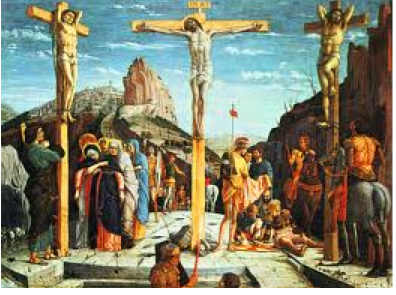
Instinctively we know there’s something better – some place that doesn’t involve car crashes and cannibalism, tornadoes and terrorists, adultery and atrocities. We know that. We also know that Christ looked at the criminal beside him on the cross and said, “Assuredly, I say to you, today you will be with Me in Paradise.” Hmm… how does that work? The guy was a thief; he wasn’t a good guy, he didn’t have time to become a good guy, and yet Christ didn’t say that to the man on His other side. So, what did Thief 1 have going for him?

Monday, June 25, 2012

Tiptoe Through the Tuilip


I find that I’m still reading and thinking about Calvinist issues this week. The more I study the more amazed I am – some day I’ll have to figure out what it is that draws people to such a thorny part of the garden.  Meanwhile let’s …


Tip-toe Through the Tulip

Not tulips either...
Aren’t acronyms marvelous? Why, the modern world could barely function without reducing every phrase or title to a list of pronounceable initials: SCOTUS and POTUS and PETA and PI. Acronyms allow us to say so much in such a narrow bandwidth that they’ve become indispensible. But they aren’t new. The five points of Calvinism were formalized c1619 as TULIP – a nifty way to remember some fairly outrageous doctrines, most of which began as nuggets of truth which eventually morphed into the misshapen thoughts that permeate a great deal of modern day Christian theology.

The T stands for Total Depravity, i.e. Original Sin. Only the most liberal Christian churches deny the essence of this concept. Eve disobeyed God, ate from the forbidden tree, lured her husband into the same behavior and together they lost their innocence. That loss still manifests itself today in man’s imperfection, in his inability to do anything pure and holy, in his state of “coming short of the glory of God,”  (Romans 3:23).

The only problem with the Calvinist take on this is that the idea has swallowed us whole to the point where we can’t even accept God’s grace without His intervention. Calvinism has allowed Original Sin to destroy free will, putting a nasty knot in the yarn of salvation – how are we to explain the observable fact that some people follow the Lord in spite of their depravity?  If we’re born screwed, then in what do we place our hope? No wonder the non-believing world hates Christianity and its God – it has left them hopeless; they can’t choose Him even if they want to. Yikes.

Thursday, June 21, 2012

Rube Goldberg and God's Sovereignty

Since my post on Monday stirred up some interesting responses, I thought I would follow up with a piece my son wrote during the same time period. Odd, isn't it, how events gather together in meaningful ways. Pete has explored some of the confusions that surround God's sovereignty in an unusual and effective way.  One of the illustrations is Pete's as well. Enjoy.


You don’t have to dig very deep into Christianity to bump into this controversy regarding God’s sovereignty and man’s choice. One school of thought will object (in varying degrees) to the idea that man has any free choice at all because, so they say, to imagine man making genuine free choices is to throw God’s sovereignty under the bus. In order to uphold God’s sovereignty, we must ultimately deny that humans have free will.

I have a way to “test” this notion. I don’t aim to prove here that man has free will, though I have very good reasons to think that he does. But I do intend to demonstrate an irony: That denying human free will for the sake of preserving God’s sovereignty can be seen to actually diminish God’s sovereignty.
Before we do that, I think it’s necessary to consider carefully what it means to say that man was created “in the image of God.”

Setting it up:

In my research I have encountered various ways of expressing the idea of being “made in the image of God,” but there does seem to be some commonality. The Christian Q & A web site GotQuestions.org describes it like this:

“Having the “image” or “likeness” of God means, in the simplest terms, that we were made to resemble God.”

Monday, June 18, 2012

Who’s in Charge Here, Anyway?


I recently shocked a friend of mine by declaring I wasn’t a Calvinist. Nothing against Calvin personally, but those who tried to step into his shoes did quite a job distorting some of the most basic Christian doctrines – election, atonement, grace, original sin, just to name a few. Calvinism seems to have gotten the eternal security piece right, but the other 4 points disfigure the essence of God and with that, since we were created in His image, contort the nature of man.

Needless to say, whole books could result from such a discussion so I’ll take this one tiny piece at a time. Lately, I’ve been asked by several different people to address issues relating to the sovereignty of God, so I’ll start there.

But first, a caveat – the Bible is the source of specific information regarding the nature of God and man, and the Bible is not just a list of disconnected quotes; it is an infinitely complex, multilayered arrangement of divine concepts and history (both past and future) and must always be understood in the light of its entirety. No doctrine can contradict another.

Sunday, June 10, 2012

Two Wings and the Body Between


My fingers hover over the keys, feeling the concepts pulsating, but uncertain of the first words. I know the ideas will plait together into a strong, beautiful rope, but which strand  do I cross over first? This piece may require me to write before I figure it out, to start braiding and let the pattern form itself. Here goes…

Strand 1 – According to W. Cleon Skousen’s book The 5,000 Year Leap, the terms “left wing” and “right wing” are derived from our national emblem – the eagle with outstretched wings. His body is covered with an escutcheon bearing the red and white stripes and the field of blue from our flag. Each wing represents an attitude about government – the left a dependence upon strong, central rule; the right a belief in the sovereignty of each individual and a wariness of federal power. The country, represented by the escutcheon, centers itself in perfect balance over the heart of the majestic bird.

Strand 2 – However, that is not to imply that a middle ground exists. It would be nice if it did; we could all just move into that hazy median, smoke a joint and be friends. We wouldn’t have to think; we wouldn’t have to know things; we wouldn’t have to form opinions. Nirvana.

Monday, June 4, 2012

Love -- To the Left of Us?


An old friend – evidently in the Facebook sense of the word only -- recently attacked me publically for being unchristian because I am conservative in my politics – I’m unloving -- which I am from time to time -- which we all are from time to time, but caring about the well-being of others in the name of Christ does not demand that I steal from Peter to pay Henry to give the rest to Paul who always votes for Henry. That isn’t what I call love. It isn’t what the Bible calls love either.

Understanding biblical love requires knowledge about language. Though English is one of the richest, most flexible languages to develop on this earth, it isn’t very exact. Koine Greek, the main language in the New Testament, is, because of its history (Alexander the Great developed it to make communication with his troops foolproof), so it’s useful to look at the Greek words that are translated love in English.

Love, that simple English word, is an emotional word that can indicate how we feel about anything from cookie dough ice cream to our firstborn child. The key word there is feel. But the biblical words that are translated love aren’t all about emotion.

Sunday, May 27, 2012

Metronalysis – On Fairytales and Freedom


I like politics – the drama, the clash of ideas – not so much the score-keeping (I’m not a sports fan). One piece of the ever-interesting political puzzle has always eluded me – why is it that you can look at a political map and clearly see that the bastions of left-wing ideology are the giant cities.  What is there about City-ness that produces that frame of mind? This last trip to New York finally coughed up some answers. I’d like to know what you think – these are my thoughts:

·      Big cities are fairytale worlds. The ramparts are beautiful, sparkly, gold-tipped. Food just appears. Water is always hot. Transportation – I’m thinking subways here – is magic – hectic and uncomfortable, but fast and no one seems to be driving the thing. It just goes. Maggie and I, as we visited modeling agencies, kept finding ourselves in Narnian places – elevator doors in questionable looking buildings opening into splendiferous spaces with ornate red chandeliers and white leather furnishings. Enchanting. Under those circumstances it would be easy to go on imagining a completely utopian existence. Why not? Is this not already Neverland?

·      Go back to transportation; in big cities going anywhere distant independently requires the punishing expense and fuss-n-bother of owning a car – to say nothing of the nerves of steel it takes to drive through LA’s freeway tangles or the clogged capillaries of New York --- or you hail a cab and pay twelve prices for the thrill of hyper-aggressive driving by someone who’s only been in the country for 3 months. Your only other option is public transportation – cheap, available, but here’s the effect: you lose the idea of being in complete control of your own movement. You wait patiently for the vehicle to appear. You sit obediently in your seat (or stand and hold on for dear life) and you go where the thing takes you, which is rarely exactly where you want to end up. The idea of independence would get shaky after too many years of that. Some freedom gets sacrificed for the advantages of living in a phenomenal city, making it easier to give up a little more, and a little more, and a little more.